
BENCH GRINDER
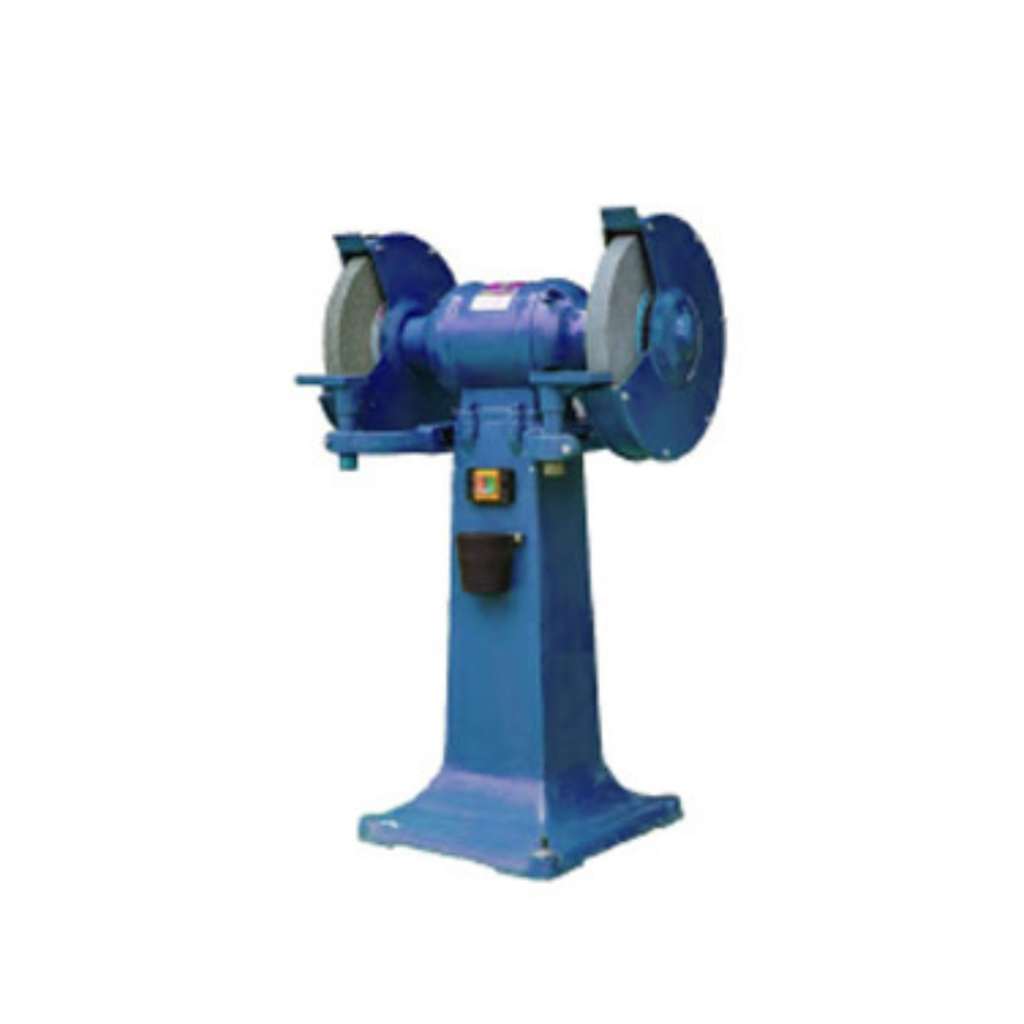
Introduction:
A bench grinder is one of the most essential and versatile tools found in workshops, garages, and industrial environments. Designed to deliver powerful, high-speed grinding performance, it plays a central role in sharpening, shaping, smoothing, and refurbishing a wide range of metal components. Whether used by hobbyists, mechanics, carpenters, or metalworkers, a bench grinder provides the reliability and precision needed to complete tasks with confidence and efficiency. Combining rugged construction with impressive rotational power, this tool ensures that both delicate and demanding jobs can be handled effortlessly.
At its core, a bench grinder consists of a motor-driven spindle that supports two grinding wheels, each designed for different applications. One wheel might be coarse for fast material removal, while the other is fine for achieving smooth, refined finishes. This dual-wheel setup gives users the flexibility to switch between tasks quickly, making the bench grinder an indispensable multi-purpose machine. From sharpening dull blades and chisels to polishing metal surfaces or removing rust, a bench grinder consistently delivers precise and dependable results.
One of the most valuable strengths of a bench grinder is its ability to extend the life of tools and equipment. By keeping blades, drill bits, and cutting edges sharpened to perfection, users can maintain peak productivity and reduce the need for frequent replacements. This not only saves time but also contributes to long-term cost efficiency. The grinder’s high-speed rotation—often ranging from 3,000 to 3,600 RPM—ensures fast, effective grinding action, making quick work of even challenging tasks. Its powerful motor provides smooth operation, minimizing vibration and promoting a safer, more controlled work experience.
Safety is another essential aspect of any bench grinder’s design. Features such as spark guards, adjustable eye shields, wheel guards, and sturdy tool rests help ensure that the user maintains proper alignment and stability throughout every task. Many modern grinders also include integrated LED work lights, enhancing visibility and allowing for greater accuracy. These thoughtful enhancements demonstrate why the bench grinder continues to be trusted by both professionals and DIY users who demand tools that deliver unmatched performance and reliability.
Beyond its practical applications, the bench grinder is a tool that encourages craftsmanship. It allows users to refine raw materials, restore worn components, and create custom shapes with precision. The sense of control and capability it provides makes it an empowering choice for anyone committed to producing high-quality work. With its combination of strength, durability, and versatility, a bench grinder is truly a workshop powerhouse, capable of transforming tough jobs into smooth, manageable tasks.
In any setting—from home workshops to large industrial facilities—the bench grinder stands out as a high-value, high-impact tool that enhances productivity, sharpens skills, and supports a wide range of metalworking needs. Its strong performance and dependable design make it a foundational piece of equipment for anyone who values efficiency, precision, and long-term durability in their tools.
Features:
- Dual Grinding Wheels: Typically comes with coarse and fine wheels for various sharpening and grinding tasks.
- Sturdy Base: Heavy-duty base minimizes vibration during operation.
- Tool Rests: Adjustable rests support tools during grinding for precision and safety.
- Eye Shields: Built-in transparent guards for user protection from sparks and debris.
- Compact Design: Suitable for workshops, garages, and small-scale applications.
- A bench grinder is equipped with a high-torque, high-speed motor that delivers consistent grinding performance. This powerful motor ensures smooth operation and allows the grinder to handle both light and heavy-duty tasks with ease.
- Most bench grinders come with two grinding wheels—one coarse and one fine. This dual-wheel setup gives users the flexibility to perform multiple tasks such as sharpening, smoothing, polishing, or shaping metal without needing separate machines.
- The grinder includes sturdy and adjustable tool rests, allowing users to maintain accurate angles and stable positioning. This enhances control and precision, especially during detailed or repetitive work.
- To protect the user, bench grinders are designed with clear eye shields, spark guards, and wheel guards. These safety features reduce the risk of injury and ensure safe, confident operation.
- Bench grinders are constructed with solid steel or cast-iron housings to minimize vibration and increase stability. This robust build ensures long-term durability and reliable performance.
- Modern bench grinders may include LED work lights, variable speed controls, and dust collection ports, offering improved precision, visibility, and cleanliness.
- From sharpening tools to removing rust, polishing surfaces, and shaping metal parts, the bench grinder is a multi-functional powerhouse that adapts to different workshop needs.
Importance:
- A bench grinder plays a crucial role in keeping blades, chisels, drill bits, and other tools sharp. Sharp tools increase work accuracy, reduce effort, and enhance productivity across various tasks.
- By restoring worn or damaged edges, a bench grinder helps extend the life of expensive tools, saving both money and resources. This makes it a highly economical addition to any workshop.
- With its high-speed grinding wheels, a bench grinder allows users to complete tasks quickly and effectively. Whether removing material or refining surfaces, the machine dramatically speeds up workflow.
- The precision and control offered by a bench grinder help improve craftsmanship. It allows users to produce cleaner cuts, smoother finishes, and professionally polished results.
- From DIY home repairs to automotive work, carpentry, and metal fabrication, a bench grinder proves essential in many fields. Its versatility makes it an invaluable tool for hobbyists and professionals alike.
- Dull tools can slip, catch, or break during use. By sharpening and maintaining them, a bench grinder enhances overall safety, reducing the likelihood of accidents.
- In metalworking shops, a bench grinder is often considered a core foundational tool, enabling users to prep materials, shape components, and refine project pieces with precision.
Technical Parameters:
| Model | DBG3020 | DBG3025 | DBGQ3025 | DBG3030 | DBG3035 | DBG3040 |
|---|---|---|---|---|---|---|
| Wheelsize(mm) | 200x25x32 | 250x25x32 | 250x25x32 | 300x40x75 | 350x40x75 | 400x40x127 |
| Power(Kw) | 0.5 | 0.75 | 1.1 | 1.5 | 1.75 | 2.2 |
| Voltage(V) | 380 | |||||
| Phase | 3 Phases | |||||
| Speed(r/min) | 2850 | 2850 | 2850 | 1440 | 1440 | 1440 |
| Dimensions(mm) | 400x420x900 | 500x405x965 | 500x405x965 | 680x450x1030 | 690x450x1050 | 710x500x1075 |
| Weight(Kg) | 37 | 46 | 48 | 97.5 | 105 | 113 |
| foot size(mm) | 370x350xΦ16 | 350x350xΦ16 | 350x350xΦ16 | 388x428xΦ16 | 388x428xΦ16 | 388x428xΦ16 |
| Model | DBG3320 | DBG3325 | DBG3330 | DBG3335 | DBG3340 |
|---|---|---|---|---|---|
| Wheelsize(mm) | 200x25x32 | 250x25x32 | 300x40x75 | 350x40x75 | 400x40x127 |
| Power(Kw) | main motor 0.75 dust removal motor 0.75 | main motor 0.75 dust removal motor 0.75 | main motor 2 dust removal motor 1.1 | main motor 2.5 dust removal motor 1.1 | main motor 2.7 dust removal motor 1.1 |
| Voltage(V) | 380 | ||||
| Phase | 3 Phases | ||||
| Speed(r/min) | 2800 | 2800 | 1440 | 1440 | 1440 |
| Dimensions(mm) | 500x840x1040 | 540x750x1000 | 500x840x1100 | 500x840x1130 | 500x840x1130 |
| Weight(Kg) | 81.5 | 140 | 226 | 231 | 270 |
| foot size(mm) | 350x750xΦ12 | 322x648xΦ12 | 428x820xΦ12 | 350x750xΦ12 | 350x750xΦ12 |