
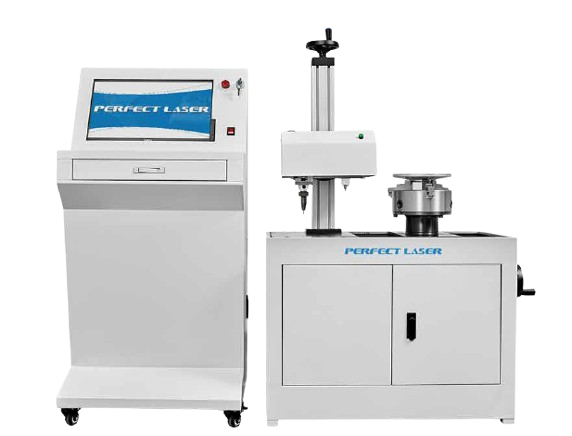
Introduction on Dot Peen Marking:
A Dot Peen Marking Machine (also called dot peen marker, impact marker, or pin marker) is a specialized industrial machine designed to produce high‑contrast, permanent marks on a wide variety of materials — especially metals and hard plastics. Unlike laser engravers or ink‑based printers that may fade or wear off over time, dot peen marking physically indents the material surface using a controlled stylus (a carbide or hardened steel pin) that creates a pattern of closely spaced dots to form characters, logos, and shapes.
In industrial manufacturing and fabrication environments, permanent identification and traceability of parts and components are crucial. Whether it’s marking serial numbers on automotive parts, engraving batch codes on heavy equipment components, or applying QR codes and trace data on aerospace parts, businesses require reliable marking solutions that withstand harsh conditions. This is where the Dot Peen Marking Machine becomes an indispensable tool.
The technology originated from the need to apply permanent and readable marks that could not be removed easily, ensuring traceability through manufacturing, assembly, quality control, resale, and repair cycles. By marking directly on the component’s surface, dot peen machines eliminate dependence on labels or adhesives that can peel, smear, or deteriorate under extreme temperatures, chemical exposure, abrasion, or outdoor conditions.
Modern dot peen marking machines come in several configurations: handheld portable units, benchtop stations, stand‑alone automated systems, and CNC‑integrated marking heads. Each variant offers different levels of flexibility, speed, and automation but shares a common principle — delivering durable, accurate, and high‑contrast marks quickly and reliably.
From small job shops producing custom components to large industrial plants needing automated in‑line marking, dot peen systems serve as the backbone of part identification, quality management, and compliance labeling. Industries such as automotive, aerospace, defense, oil & gas, heavy machinery, electronics, medical devices, and tooling depend on these machines to meet traceability standards, reduce errors, and maintain product integrity.
Why Use a Dot Peen Marking Machine?
Dot peen marking machines are chosen by manufacturers for many practical and strategic reasons. These machines don’t just add random marks — they provide a robust method of permanently encoding critical data into parts. Below are the major reasons industries rely on dot peen technology:
Permanent, Non‑Removable Marking
Dot peen machines physically indent the surface of the material. Unlike ink or laser discoloration, the marks are mechanically engraved, making them resistant to:
– Wear and abrasion
– Heat and cold extremes
– Corrosion and chemical exposure
– High vibration environments
Versatility Across Materials
Dot peen marking is suitable for a wide range of materials, including:
– Carbon steel
– Stainless steel
– Aluminum
– Brass and copper alloys
– Titanium
– Hard plastics (e.g., ABS, PVC)
– Certain composite materials
Flexibility of Marking Formats
Dot peen markers support various marking formats:
– Alphanumeric text
– Logos and images
– Datamatrix and QR codes
– Barcodes
– Custom design patterns
Ease of Integration
Modern dot peen machines can be integrated into:
– Manual workstations
– CNC machining centers
– Robotic automation cells
– Conveyor lines
User‑Friendly Operation
Most dot peen systems come with intuitive software interfaces, which allow operators to:
– Design marking layouts
– Set fonts and sizes
– Import pattern templates
– Configure marking on multiple axes
Features:
- The entire machine adopts imported industrial grade components, with high marking accuracy and long service life. 7 inch LCD operation, no computer required, stable communication, simple and easy to use.
- Its maintenance free, saving time and improving work efficiency, Automatically prompt for file saving can be connected to the external bar code machine to print bar codes.
- With data retrieval function, it can archive what you print every day and previously is not limited by space and can work continuously for more than 24 hours
Portable vs Bench vs CNC Integrated Units
Dot peen machinery comes in multiple configurations:Portable Handheld Units
– Lightweight and easy to maneuver
– Ideal for marking large or fixed installations
– Perfect for field service, on‑site markingBenchtop Marking Stations
– Most common for small‑to‑medium workshops
– Stable platform for repeatable marks
– Good for moderate production runsAutomated / CNC Integrated Marking Heads
– Mounted on CNC machines or industrial automation cells
– Ideal for high‑volume or inline marking
– Can operate on multi‑axis coordinates- Marking Software and Control Panel
Modern dot peen machines come with intuitive marking software that enables:
– Choice of fonts and sizes
– Custom logos and graphic import
– Barcode and 2D code generation
– Sequential or variable data input
Applications:
Automotive Industry
Automotive components require permanent identification for:
– VIN markings
– Engine and gearbox codes
– Safety‑critical part traceability
Aerospace and Defense
Aerospace parts often contain:
– Part numbers
– Batch codes
– Certification marks
Oil & Gas
Pipeline components, valves, and flanges must carry:
– Pressure ratings
– Manufacturer IDs
– Production dates
Tool & Die and Mold Shops
Molds and dies require:
– Part identification
– Revision controls
– Lifetime tracking
Medical Device Manufacturing
Medical implants and instruments often need markings that:
– Survive sterilization
– Maintain readability under body conditions
– Meet traceability standards
Electronics and PCB Manufacturing
While small components may have printed codes, rugged PCB frames or casing often receive dot peen marks for:
– Batch coding
– Version control
Construction Materials
Structural beams, metal channels, and fabricated assemblies often need:
– Mill certifications
– Length and grade markings
Marine and Shipbuilding
Ship structural components and hardware often receive marks that must:
– Withstand saltwater exposure
– Resist corrosion
Job Shops and Contract Fabricators
General fabricators use dot peen marking for:
– Customer part tags
– Order tracking
– Quality contro
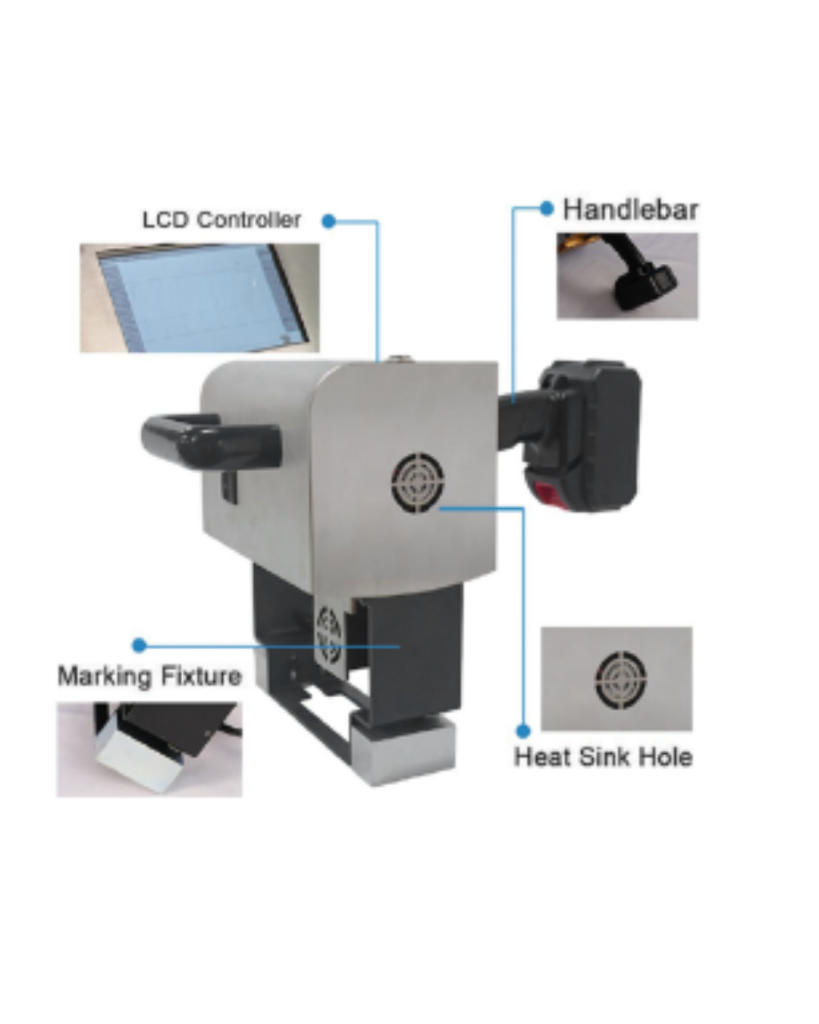
Technical Parameters:
| Model | HDPM-260 |
|---|---|
| Marking Area | 150mmX100mm |
| Marking Accuracy | 80mm*40mm |
| Pin Hardness | HRC 92 |
| Power Supply | 110V-240V |
| Printed Direction | 360-degree adjustment |
| Lithium Battery | Yes |
| Working Environment | -5 ~ 40 360-degree C |
| Working Optional Area | 200mmX100mm (or can be customized) |
| Standard Marking Area | 135mmX20mm |
| Marking Speed | 5-120 characters/min |
| Marking Depth | 0.01~1 mm (depends on material hardness) |