
HYDRAULIC SWING BEAM SHEARING MACHINE
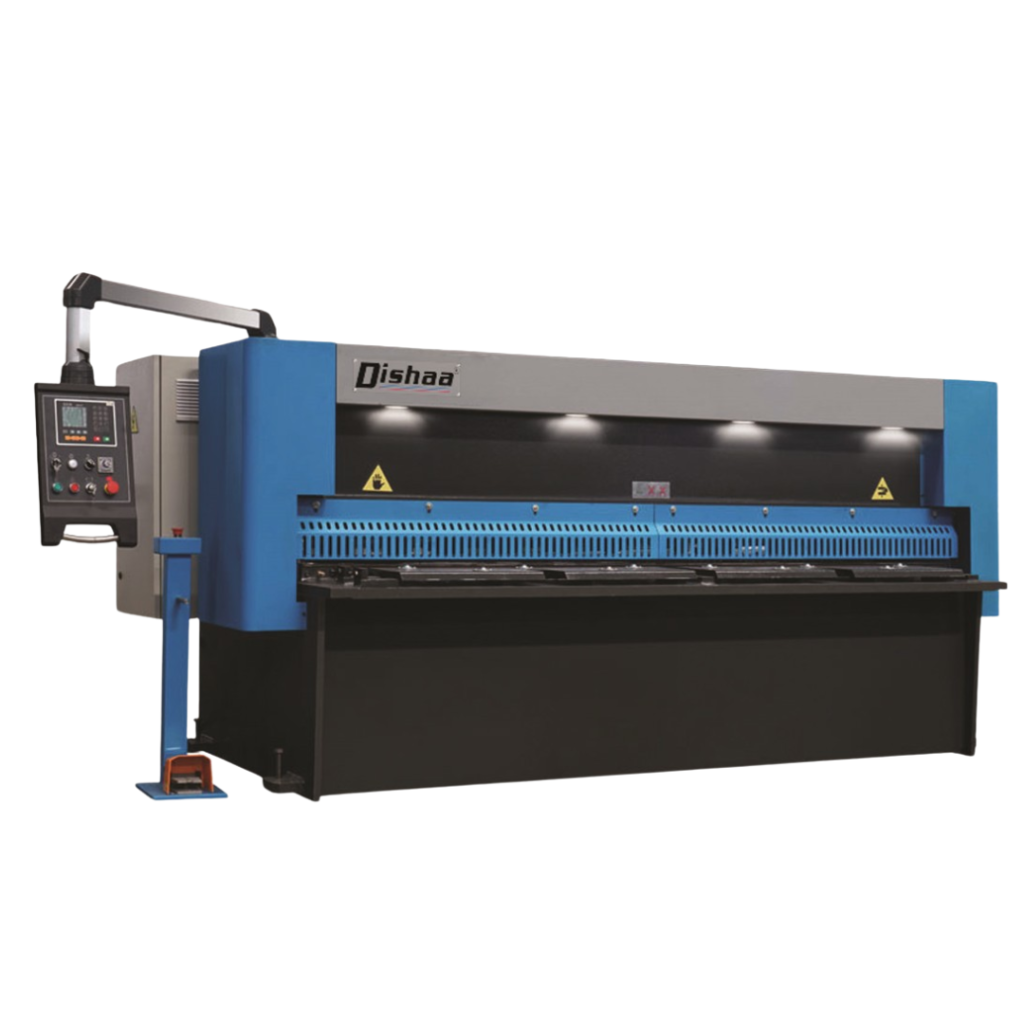
Introduction:
In the modern metalworking and fabrication industry, precision, efficiency, and reliability are essential factors that determine the quality of any finished product. Among the many types of machinery used to achieve accurate sheet metal cutting, the hydraulic swing beam shearing machine has emerged as one of the most preferred solutions. Whether in automotive workshops, industrial manufacturing units, HVAC fabrication, or steel furniture production, this machine plays an indispensable role in shaping raw metal sheets into usable components with smooth, burr-free edges. Its advanced hydraulic system, combined with a uniquely designed swing beam mechanism, makes it ideal for handling both thin and moderately thick metal sheets while maintaining outstanding accuracy.
A hydraulic swing beam shearing machine is designed to deliver consistent and clean cuts by using hydraulic cylinders to power the cutting beam, which moves in a swinging arc. Unlike conventional mechanical shears or guillotine-type shearing machines, swing beam shears operate with reduced vibration and noise, ensuring a smoother cutting experience. This not only increases the longevity of the machine but also enhances workplace safety and comfort. Additionally, the hydraulic power system allows for greater control over cutting pressure, making the machine highly efficient even when working on tougher materials such as stainless steel or alloy sheets.
Another major advantage that makes the hydraulic swing beam shearing machine incredibly popular in fabrication industries is its user-friendly operation. Many modern models come with NC or CNC control panels, allowing operators to set precise cutting lengths, angles, and repetitions with minimal manual effort. The presence of features like back gauges, hold-down clamps, and adjustable blade gaps ensures consistent performance and reduces human error significantly. Even operators with minimal experience can achieve professional-grade results once they understand the machine’s basic functions.
From an economic perspective, these machines offer excellent value due to their durability and low maintenance needs. Their sturdy construction, high-quality blades, and robust hydraulic systems enable them to withstand continuous industrial use without frequent breakdowns. Moreover, the swing beam design helps maintain blade sharpness for longer durations, reducing the cost and downtime associated with blade replacement or sharpening.
As industrial production demands continue to increase globally, the need for reliable, high-precision cutting machinery has grown equally. Companies are seeking equipment that not only enhances productivity but also ensures consistent quality across large batches of metal sheets. The hydraulic swing beam shearing machine fulfills all these requirements, making it a trusted choice for small workshops as well as large manufacturing plants.
Adventages:
- One of the biggest advantages of swing beam shears is their ability to deliver smooth, burr-free cuts with exceptional accuracy. The swing beam moves in a controlled arc, which ensures uniform blade contact throughout the cutting process. This results in cleaner edges, reduced need for secondary finishing, and improved overall production quality.
- Compared to mechanical shears, the hydraulic swing beam system produces significantly lower vibration and noise. The hydraulic mechanism absorbs shock better, allowing the blade to cut metal more quietly and smoothly. This not only improves cut consistency but also creates a more comfortable and safer working environment for operators.
- Thanks to its powerful hydraulic system, the machine can handle a wide range of materials—including mild steel, stainless steel, aluminum, copper, and alloy sheets. It performs exceptionally well with medium-thickness materials, maintaining the same cutting accuracy even under heavy workloads. This versatility makes it suitable for industries with diverse metal cutting needs.
- The swing beam design puts less stress on the blades, which helps maintain their sharpness for longer periods. Additionally, most machines allow easy blade gap adjustment, enabling operators to set the perfect cutting clearance based on material thickness. This feature reduces wear and tear and enhances the lifespan of both the blades and the machine.
Features:
- The UG (finite element) analysis method was used to optimize the design with computer aid. The fuselage adopts integral steel plate welded structure, which has good strength, rigidity and vibration resistance.
- Internal stress relief by tempering.
- The whole frame is sanded to remove rust and sprayed with anti-rust paint. The table is equipped with an auxiliary tool holder for easy blade adjustment.
- The work surface is equipped with feeding balls, which is light to operate.
- The blade gap adjustment adopts stepless adjustment mechanism to adapt to the shearing needsof different plate thicknesses and materials.
- Rectangular lower blade with four cutting edges for extended blade life. Adjust the shear stroke to improve processing efficiency and realize segmented shearing function.
- The number of cuts is automatically counted, which reduces the inventory work of cumbersome locks
| Model | Thickness (mm) |
Width (mm) |
Cutting Angle (°) |
Material Strength (Kj/cm) |
Backgear Travel (mm) |
Cutting Times (T/min) |
Power (kW) |
Weight (T) |
Overall Dimension L×W×H (mm) |
|---|---|---|---|---|---|---|---|---|---|
| 4×2500 | 4 | 2500 | 1°30′ | ≤450 | 20–600 | 16 | 5.5 | 3.4 | 3100×1700×1650 |
| 4×3200 | 4 | 3200 | 1°30′ | ≤450 | 20–600 | 14 | 5.5 | 4.1 | 3800×1700×1650 |
| 4×4000 | 4 | 4000 | 1°30′ | ≤450 | 20–600 | 10 | 5.5 | 5.6 | 4600×1750×1750 |
| 6×2500 | 6 | 2500 | 1°30′ | ≤450 | 20–600 | 14 | 7.5 | 4.4 | 3100×1750×1700 |
| 6×3200 | 6 | 3200 | 1°30′ | ≤450 | 20–600 | 12 | 7.5 | 5.1 | 3800×1750×1700 |
| 6×4000 | 6 | 4000 | 1°30′ | ≤450 | 20–600 | 8 | 7.5 | 7.6 | 4600×1850×1850 |
| 6×5000 | 6 | 5000 | 1°30′ | ≤450 | 20–600 | 6 | 11 | 12.5 | 5600×2050×2180 |
| 6×6000 | 6 | 6000 | 1°30′ | ≤450 | 20–600 | 5 | 11 | 14.8 | 6600×2120×2230 |
| 8×2500 | 8 | 2500 | 1°30′ | ≤450 | 20–600 | 10 | 11 | 5.3 | 3100×1750×1700 |
| 8×3200 | 8 | 3200 | 1°30′ | ≤450 | 20–600 | 8 | 11 | 6.5 | 3800×1750×1700 |
| 8×4000 | 8 | 4000 | 1°30′ | ≤450 | 20–600 | 8 | 11 | 7.7 | 4600×1850×1850 |
| 8×5000 | 8 | 5000 | 1°30′ | ≤450 | 20–600 | 8 | 11 | 13.5 | 5600×2120×2120 |
| 8×6000 | 8 | 6000 | 1°30′ | ≤450 | 20–600 | 8 | 11 | 15.8 | 6600×2200×2280 |
| 10×2500 | 10 | 2500 | 2° | ≤450 | 20–600 | 9 | 11 | 6.5 | 3100×1820×1920 |
| 10×3200 | 10 | 3200 | 2° | ≤450 | 20–600 | 9 | 11 | 7.7 | 3800×1820×1920 |
| 10×4000 | 10 | 4000 | 2° | ≤450 | 20–600 | 8 | 11 | 9.1 | 4600×1900×2000 |
| 10×6000 | 10 | 6000 | 2° | ≤450 | 20–600 | 8 | 15 | 22 | 6600×2400×2350 |
| 12×2500 | 12 | 2500 | 2° | ≤450 | 20–600 | 9 | 18.5 | 9 | 3100×1820×1920 |
| 12×3200 | 12 | 3200 | 2° | ≤450 | 20–600 | 9 | 18.5 | 9.4 | 3800×1820×1920 |
| 12×4000 | 12 | 4000 | 2° | ≤450 | 20–600 | 8 | 18.5 | 11.8 | 4600×1950×2100 |
| 12×5000 | 12 | 5000 | 2° | ≤450 | 20–750 | 8 | 18.5 | 15.8 | 5600×2400×2350 |
| 12×6000 | 12 | 6000 | 2° | ≤450 | 20–750 | 8 | 18.5 | 26 | 6600×2400×2350 |
| 16×2500 | 16 | 2500 | 2°30′ | ≤450 | 20–600 | 9 | 22 | 9.2 | 3100×1950×2060 |
| 16×3200 | 16 | 3200 | 2°30′ | ≤450 | 20–600 | 8 | 22 | 10.8 | 3800×1950×2080 |
| 16×4000 | 16 | 4000 | 2°30′ | ≤450 | 20–600 | 8 | 22 | 15.3 | 4600×2300×2180 |