
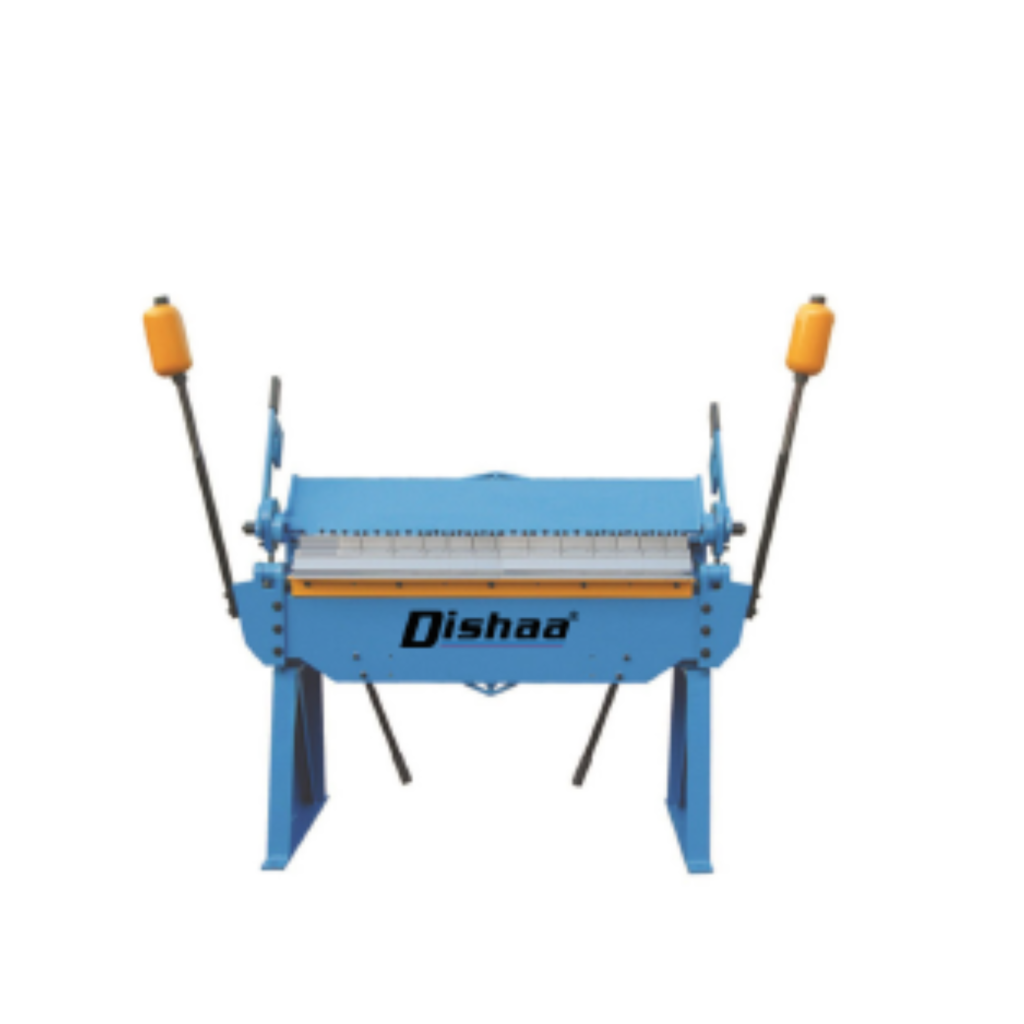
Introduction about Pan & Box Brake:
In sheet metal fabrication, converting flat metal sheets into functional three‑dimensional components such as boxes, pans, trays, and channels is a fundamental operation. A Pan & Box Brake Machine is a specialized bending machine engineered to perform this task efficiently, accurately, and with consistent quality. Unlike simple metal brakes or manual bending tools, a Pan & Box Brake Machine is designed specifically to produce multi‑faceted bends — forming seamless boxes, deep pans, and precise lip edges in one machine.
Pan & Box Brake Machines are widely used across industries — from custom fabrication shops to large industrial manufacturing units — because they combine rigidity, precision, and speed. The machine typically consists of a heavy‑duty frame, adjustable clamping and bending beams, and features that allow operators to create precise bends without relying on manual force or repetitive secondary processes. These machines help turn 2D sheet metal into usable 3D structures that serve as enclosures, housings, trays, ductwork components, and structural panels.
Modern Pan & Box Brake Machines range from manually operated mechanical models to highly efficient hydraulic and electric systems with digital angle controls. Regardless of configuration, they address a core fabrication challenge: producing consistent bends throughout a run of parts while reducing labor, minimizing errors, and ensuring reproducible results.
This article offers a deep dive into everything you need to know about Pan & Box Brake Machines: why they are essential tools in sheet metal fabrication, what cutting‑edge features to look for, where they are used, the key benefits they deliver, and the limitations you need to consider before investing in one.
Why to Use a Pan & Box Brake Machine?
Pan & Box Brake Machines play an essential role in metal fabrication workflows by producing accurate bends and complex formed shapes that are not easily achievable with ordinary brakes or makeshift tools. Here’s a detailed breakdown of why you should use one:
Reduce Manual Labor and Fatigue
Previously, forming box shapes involved a combination of manual bending, hammers, clamps, and skill — a labor‑intensive process that depended heavily on operator strength and experience. A Pan & Box Brake Machine mechanizes this process, drastically reducing the physical effort and skill dependency required, and minimizing operator fatigue.
Higher Productivity & Faster Throughput
Manual methods take significantly longer per part and are prone to variation. By automating the bending sequence, a Pan & Box Brake Machine enables shops to produce more parts in less time, improving throughput and supporting higher production runs without compromising quality.
Versatility Across Sheet Sizes and Materials
These machines can handle a broad range of sheet thicknesses and sizes — from light‑gauge aluminum panels to thicker mild steel sheets — depending on machine capacity. This makes Pan & Box Brake Machines suitable for a wide variety of fabricated products.
Integration with Fabrication Lines
In modern fabrication shops, Pan & Box Brake Machines are often used in conjunction with shearing machines, press brakes, and welding stations. This integration streamlines the workflow, supporting lean manufacturing environments where time‑to‑market and quality are strategic priorities.
Features:
- With segment bending blade for the bending of box section.
- Various widths segment shiftable setup.
- With balanced hammer, it can easy to operate and easy for folding
Adjustable Clamping and Bending Beams
The heart of the machine is the clamping and bending mechanism:
– Clamping Beam: Holds the sheet metal firmly against the machine’s bed.
– Bending Beam: Applies bending force to create defined angles.Manual, Semi‑Automatic, or Fully Powered Operation
Pan & Box Brake Machines are available in different configurations:
– Manual models: Best for low volumes and simple bends.
– Semi‑automatic machines: Provide powered bending with manual setup.
– Fully automatic machines: Include motor or hydraulic drives that control bending sequences automatically, often with programmable angles.These machines are often equipped with work support tables or rollers:
– Large tables help support long sheets so they don’t sag during bending.
– Rollers enable smooth feeding and reduce handling effort on long or heavy sheets.User‑Friendly Control Interface
Many modern machines include a control interface (either mechanical knobs or digital panels) that allows operators to:
– Set bend angles
– Adjust stops
– Monitor bend sequences
– Store presets for repeat jobsSupport Tables and Rollers
Safety Features
Industrial machines include standard safety devices such as:
– Emergency stop buttons
– Electrical and mechanical interlocks
– Operator guards
– Two‑hand control options
These elements protect users and ensure compliance with occupational safety standards.Optional Accessories and Add‑Ons
Depending on the application, machines may offer accessories like:
– Angle presets
– Die kits for special bends
– Foot pedal controls
– Powered bending radius adjustment
Applications:
Sheet Metal Fabrication Workshops
General fabrication shops use these machines daily to form:
– Boxes and trays
– Enclosures and covers
– Panels and trays for assembly
– Bases and supports for equipment
Electrical & Electronics Industry
– Control panels, switchboard boxes, and electrical enclosures.
– Battery casings and cable management trays.
HVAC & Ducting
– Fabrication of air conditioning ducting, ventilation boxes, and fan covers.
– Perfect for making folded sheet parts used in air flow systems.
Automotive & Aerospace
– Sheet metal body panels, chassis trays, brackets, and internal housings.
– Used in producing lightweight metal boxes for aircraft or automotive assemblies.
Furniture Manufacturing
– Steel or aluminum components for modular office furniture, drawers, and filing cabinets.
– Bends used in frames and structural parts for metal furniture.
Construction & Architecture
– Flashings, facades, and metal framing structures.
– Boxes and supports used in ceilings, walls, or exterior cladding.
Technical Parameters:
| Model | Capacity (mm) | Packing size(cm) | N.W./G.W.(kg) | ||
|---|---|---|---|---|---|
| Length | Thickness | Angle | |||
| DW2.5X1220 | 1220mm (48") | 2.5mm(12Ga) | 0-135° | 171x75x94 | 513 / 575 |
| DW2.0X2040A | 2040mm (80") | 2.0mm(14Ga) | 0-135° | 255x76x100 | 850 / 1000 |
| DW2.5X2040A | 2040mm (80") | 2.5mm(12Ga) | 0-135° | 255x76x100 | 1145/1295 |
| DW2.0X2540A | 2540mm (100") | 2.0mm(14Ga) | 0-135° | 300x76x100 | 1190/1360 |
| DW2.5X2540A | 2540mm (100") | 2.5mm(12Ga) | 0-135° | 300x76x100 | 1310/1480 |
| DW2.0X3050A | 3050mm (120") | 2.0mm(14Ga) | 0-135° | 350x76x110 | 1490/1690 |
| DW1.2X3700A | 3700mm (146") | 1.2mm(20Ga) | 0-135° | 425x85x120 | 2450/2670 |
| DW0.8X4000A | 4000mm (157") | 0.8mm(22Ga) | 0-135° | 470x90x120 | 2700/2950 |