
MANUAL & ELECTRIC PIPE BENDING MACHINE
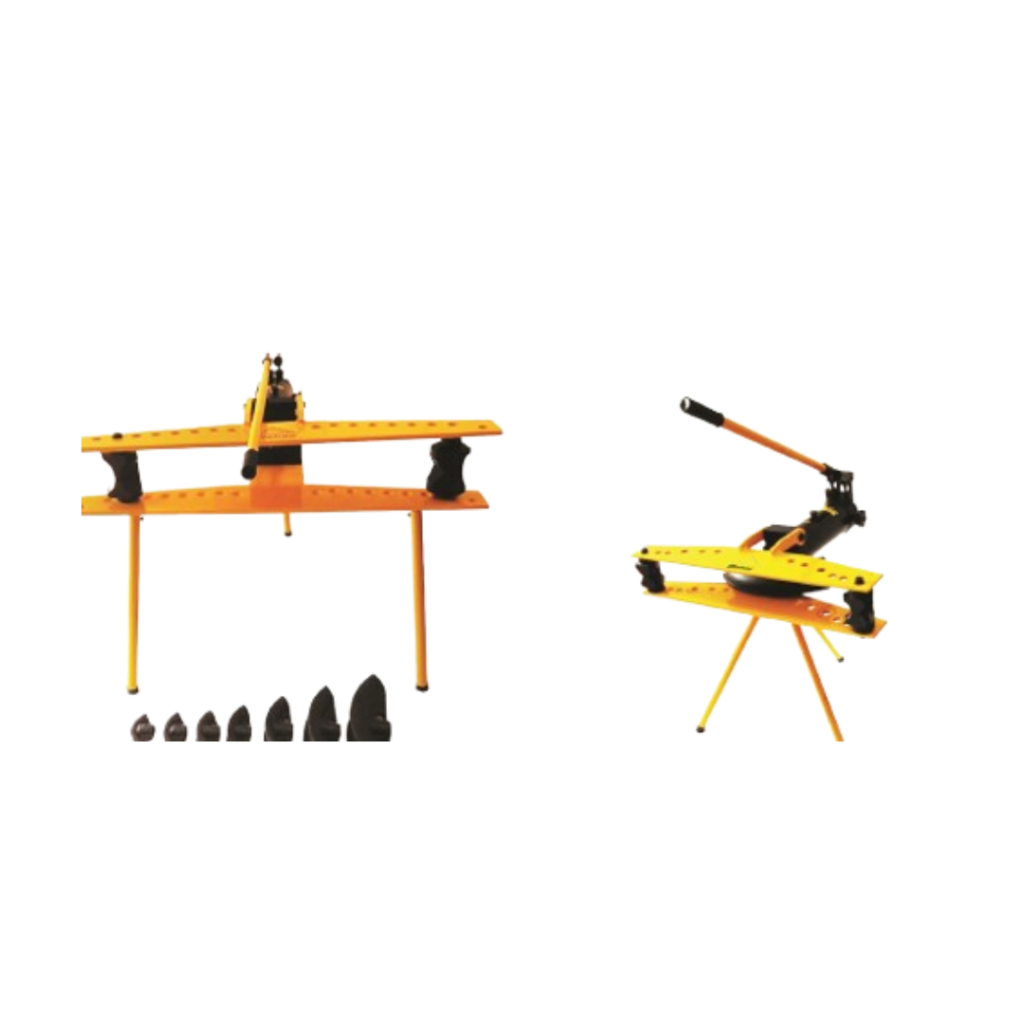
Introduction:
Pipe bending is an essential process in the fabrication and construction industries. Whether you’re building structural frameworks, automotive parts, furniture, or plumbing systems, bending pipes accurately is key. To meet varying project needs, two primary types of pipe bending machines are commonly used: Manual Pipe Bending Machines and Electric Pipe Bending Machines.
Manual pipe benders are traditional tools that use mechanical leverage to bend pipes. They are simple, cost-effective, and often used for small-scale or on-site work. These machines require physical effort and skill but are very reliable for light-duty applications, especially in locations without access to electricity or for mobile operations.
Electric pipe bending machines, on the other hand, bring automation and precision to the bending process. Powered by electric motors and controlled via user-friendly panels, they ensure consistent, high-quality bends with minimal manual effort. These machines are widely used in industrial setups, workshops, and factories where speed, volume, and accuracy are crucial.
Choosing between manual and electric pipe benders depends on your project requirements, budget, and production volume. In many cases, workshops use both types for different tasks—manual for simple or repair work and electric for production runs.
Understanding the capabilities, applications, and limitations of both types of machines is crucial to make the right investment. Below, we explore the detailed features, uses, and benefits of these machines to help guide your decision.
Product Description:
- Simple manual hydraulic operation for easy use.
- Completely manual hydraulic operation so external power is not needed.
- Heavy-duty hydraulic cylinder capable of bending schedule 40 pipe.
- Cold bending pipes only in one turn. Up to 90 degree, hydraulic equipment makes more precise banding..
- Pipe stands are also included for better bending experience.
- Suitable for cold bending of thick-walled pipes(gas,water and steam pipes, non-heated black iron pipes, galvanized pipes), up to 90°
Applications:
– Construction Industry
For creating steel frameworks, handrails, and structural supports.
– Plumbing & HVAC
For shaping pipes used in plumbing lines, gas systems, and heating/cooling networks.
– Furniture Manufacturing
Creating stylish bends in metal frames for chairs, tables, and beds.
– hipbuilding & Aerospace
For forming complex piping systems and frames with precision.
– eneral Fabrication
Custom metal works, artistic structures, and architectural applications.
Features:
Manual Pipe Bending Machine Features:
– Rugged, durable construction for long-term use.
– Portable design for on-site work.
– Leverage-based mechanical operation.
– Interchangeable dies for various pipe sizes.
– Suitable for bending small to medium diameter pipes.
– No need for power supply—ideal for remote work.
Electric Pipe Bending Machine Features:
– Electrically powered for automated bending.
– Programmable angle and bending memory.
– High repeatability and accuracy.
– Touchscreen or digital control panels.
– Capable of handling larger diameters and thicker materials.
– Faster operation and increased productivity.
Benefits:
Using the right pipe bending machine improves workflow, reduces waste, and ensures a professional finish to your products
Benefits of Manual Pipe Benders:
– Cost-effective for small workshops and startups.
– Easy to operate and maintain.
– Ideal for small batches and maintenance tasks.
– Compact and lightweight – easy to transport.
Benefits of Electric Pipe Benders:
– High-speed operation – ideal for production.
– Consistent, high-quality bends with minimal errors.
– Reduces physical labor and operator fatigue.
– Supports complex bending operations.
– Time-saving with programmable settings.
Limitations:
Understanding these limitations helps businesses choose the right tool for their needs and avoid overspending or underperforming
Manual Pipe Benders Limitations:
– Not suitable for high-volume production.
– Requires physical effort and experience.
– Limited to smaller pipe diameters.
– Lower precision compared to electric machines.
Electric Pipe Benders Limitations:
– Higher initial investment.
– Requires power supply and maintenance.
– Not ideal for very simple or remote tasks
Technical Parameters:
| Model No. | Max | Max stroke | Bending dies | Pipe wall thickness | G.W. | Dimension |
|---|---|---|---|---|---|---|
| DPB-2J | 13T | 250mm | 1/2", 3/4", 1", 1 1/4", 1 1/2", 2" | 2.75-4.5mm | 53kg | 73×32×20cm |
| DPB-3J | 20T | 290mm | 1/2", 3/4", 1", 1 1/4", 1 1/2", 2", 2 1/2", 3" | 2.75-5mm | 105kg | 94×40×21cm |
| DPB-4J | 23T | 370mm | 1/2", 3/4", 1", 1 1/4", 1 1/2", 2", 2 1/2", 3", 4" | 2.75-6mm | 155kg | 118×46×23cm |