
RADIAL DRILLING
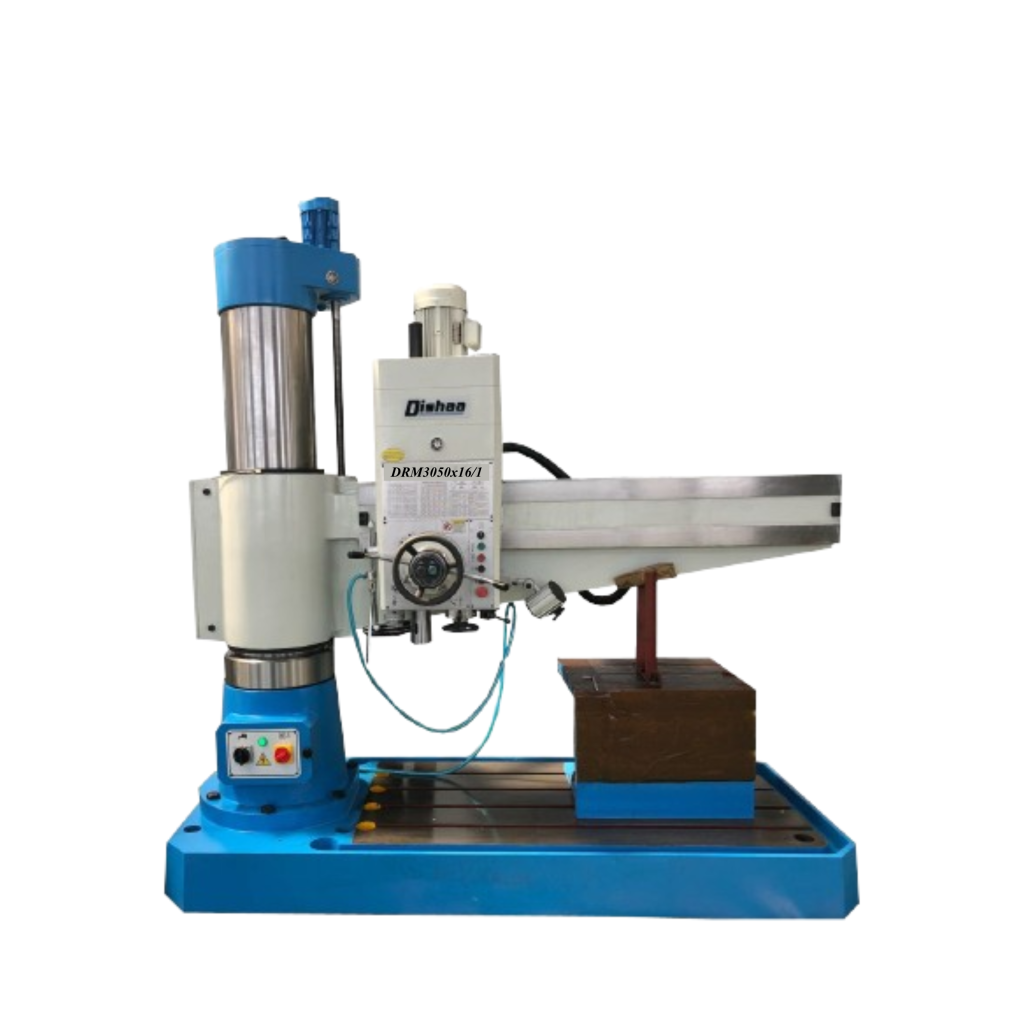
Introduction:
A radial drilling machine is one of the most versatile types of drilling machines used in manufacturing and fabrication industries. It is primarily designed to drill holes in heavy and large workpieces that are not easy to move. Its unique arm-based design allows for flexible positioning of the drill head, making it suitable for precise drilling operations on large components.
Radial drilling machines are powerful, versatile tools used in metalworking and manufacturing industries to drill precise holes in heavy and large workpieces. Unlike conventional drilling machines, radial drills are designed with a radial arm that can rotate, move up or down, and extend outward, allowing drilling at multiple points without moving the workpiece.
This design makes them ideal for handling bulky or awkwardly shaped components that are difficult to reposition. The radial arm provides the flexibility to position the drill head over the desired spot with minimal effort, increasing productivity and accuracy.
In a typical radial drill machine, the drilling head is mounted on a radial arm, which can rotate, slide, and be raised or lowered along the column. This design allows the operator to position the drill bit over the workpiece without repositioning the material, improving efficiency and accuracy. It also reduces time and labor required for handling heavy jobs.
Radial drilling machines come in various sizes and capacities, typically categorized by the length of the radial arm and the diameter of the drilling column. These machines are ideal for drilling, boring, tapping, counterboring, spot facing, and reaming operations.
In industries such as aerospace, automotive, steel fabrication, heavy engineering, and defense, radial drilling machines are indispensable tools. Their adaptability to various materials like mild steel, cast iron, aluminum, and alloys makes them a crucial asset for any heavy-duty workshop or production line.
Furthermore, with advancements in CNC and semi-automatic technologies, modern radial drilling machines offer greater precision, control, and reduced human error. These upgrades make the machine not only powerful but also smart, enabling integration with automated production lines for higher productivity
Features:
When choosing a radial drilling machine, factors like spindle travel, drilling capacity, arm length, and motor power play a vital role. A high-quality radial drill ensures stability, vibration-free operation, and long service life. This is why at Dishaa Machinery & Tools, we provide CE-certified, industrial-grade radial drilling machines that meet the most demanding operational standards.
1. Rotating & Adjustable Radial Arm:
Allows drilling head movement in both radial and vertical directions for easy operation.
2. Heavy-Duty Construction:
Built with high-grade cast iron and steel to handle tough jobs with minimal vibration.
3. Wide Drilling Capacity:
Capable of drilling large diameter holes up to 75 mm or more, depending on the model.
4. Multiple Spindle Speeds & Feeds:
Offers various speed settings to match different material requirements.
5. Precision Machining:
Equipped with precision-ground gears and guideways for accurate drilling.
6. Safety Mechanisms:
Includes emergency stop buttons, overload protection, and spindle lock.
7. Ease of Use:
User-friendly control panel and mechanical feed make it simple to operate.
8. CNC/Auto Versions Available:
Optional semi-automatic or CNC control for high-volume production.
Applications:
1. Heavy Engineering:
Ideal for drilling large workpieces in heavy equipment and machinery parts.
2. Metal Fabrication:
Used in sheet metal industries for accurate hole placement in structural components.
3. Automotive Industry:
Drilling engine blocks, gear cases, and other heavy components.
4. Aerospace Industry:
Precision drilling in aluminum and alloy parts for aircraft assembly.
5. Shipbuilding:
Drilling on thick steel plates used in ship hulls and marine parts.
6. Railways & Infrastructure:
Manufacturing and maintenance of railway bogies and infrastructure parts.
7. Oil & Gas Equipment:
Fabrication and drilling of high-strength components used in rigs and refineries.
8. Steel Plants:
Processing large steel frames, rolls, and beams.
Benefits:
1. Versatility:
Performs various operations such as drilling, reaming, tapping, and boring.
2. Time-Saving:
The arm and head movement allow drilling multiple holes without repositioning the workpiece.
3. Reduces Labor Effort:
The adjustable arm and rotating head eliminate the need for manual material movement.
4. Precision & Consistency:
Maintains accuracy even on irregular or oversized workpieces.
5. Durability:
Heavy-duty build ensures long-term, vibration-free operation.
6. Safety:
Designed with robust safety features for operator protection.
7. Cost-Effective:
Reduces reliance on multiple machines and enhances overall shop efficiency.
8. High Productivity:
Faster drilling cycle times with minimal setup.
9. Low Maintenance:
Requires minimal servicing, reducing downtime and costs.
10. Scalable for Industries:
Available in various capacities to suit small workshops to large manufacturing units.
Limitations:
1. High Initial Cost
Radial drilling machines are more expensive than standard bench or pillar drills due to their size, design, and capabilities.
2. Large Floor Space Requirement
These machines are bulky and require significant space, making them unsuitable for compact workshops.
3. Manual Operation in Basic Models
Many models are semi-automatic or manual, requiring skilled operators for precise work.
4. Not Suitable for Small Components
Designed for large workpieces, it’s not ideal for high-volume small part production.
5. Slower Compared to CNC Machines
Though versatile, it’s generally slower than dedicated CNC drilling centers for high-speed jobs.
6. Regular Maintenance Needed
Due to mechanical movements and size, frequent lubrication and alignment checks are essential.
7. Limited Automation
Basic radial drills lack integration with automated systems unless upgraded or customized.
8. Vibration Issues at High Speed
Improper anchoring or balancing can cause vibrations, reducing hole accuracy.
Technical Parameters:
| SPECIFICATIONS | Units | DRM3022×7 / DRM3032×10 | DRM3032X10 |
|---|---|---|---|
| Max.drilling dia. | mm | 32 | 32 |
| Distance between spindle nose and table surface | mm | 275-680 | 330-1060 |
| Distance from spindle axis to column surface | mm | 300-700 | 200-910 |
| Spindle travel | mm | 130 | 120 |
| Spindle taper | - | MT3 | MT4 |
| Spindle speed range | rpm | 100-1600 | 108-1000 |
| Spindle speed steps | - | 8 | 6 |
| Spindle feeding range | rpm | 0.08-0.23 | 0.10-0.25 |
| Spindle feeding steps | - | 3 | 3 |
| Main motor power | kw | 0.75/1.1 | 1.5/2.2 |
| Lifting motor power | kw | - | 0.55 |
| Machine weight | kg | 415/540 | 1080 |
| Overall dimension | mm | 1220*620*1280 1270*690*1370 | 1400*660*2060 |